Developing Visual Inspection Software for the AI Era (Part 1)
 ovit
ovitWhy Develop New Visual Inspection Software Now?
It has been more than 20 years since we began developing visual inspection software.
Over the years, the FlexInspector and FIS series have been used by many customers in the field and have undergone numerous improvements.
Each feature has been added to address customer requests and resolve issues that arose in the field.
In other words, the source code we’ve built up over more than 20 years has value beyond that of a mere program.
It’s packed with “practical know-how that really works in the field.”
So, why are we trying to develop new visual inspection software right now?
The reason is not that the existing software has become outdated.
This is because the advent of AI has begun to drastically change the very way software is developed.
In the past, it took an enormous amount of time to understand the source code, organize the design, and develop it into a new program.
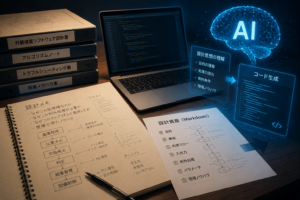
However, AI is now capable of reading existing source code, organizing its structure, and assisting with design.
I feel that this marks a major turning point for a company like ours, which has been developing software for many years.
Of course, AI doesn't do everything for us.
What kind of software are we aiming to develop?
What design philosophy will guide its development?
What kind of user experience do we want to provide?
Ultimately, it is people who determine this direction.
On the other hand, AI is particularly effective when it comes to implementing designs, organizing code, and creating documentation.
By combining "what people do best" with "what AI excels at," we have entered an era where we can develop higher-quality software faster than ever before.
We are currently reviewing the source code we have accumulated over the past 20 years.
The goal is not to simply reuse the old code as-is.
Our goal is to extract the design philosophy embedded in these systems and the know-how cultivated on the shop floor, and carry them forward into the next-generation visual inspection platform.
This new platform is more than just an update.
We aim to lay the foundation for new visual inspection software that is well-suited for the AI era.
In this category, we'll share the development process as candidly as possible.
I plan to share not only the things that went well, but also the challenges I faced and the process of trial and error.
In this era of developing software with AI, what’s actually happening on the ground?
I would be delighted if you would read this series as a realistic account of those events.
Next Episode Preview
"Is source code an asset or a liability?"
How does AI interpret source code that has been refined over more than 20 years? I’d like to write about how AI is beginning to change the way we view what is commonly referred to as “legacy code.”
\ Check the latest updates /